
If your home is along Route 6A in Sandwich, Barnstable, Yarmouth, Dennis, Brewster or Orleans, most visible exterior changes need historic approval before work starts. Here is what that covers and how to plan around it.
By the Best Deal Home Group team, Centerville, MA
If your house is in the Old King's Highway Regional Historic District, most exterior changes that can be seen from a public way need a Certificate of Appropriateness from your town's Old King's Highway committee before any work starts. That covers projects like new siding, a different roofing material, replacement windows and doors, decks, fences and additions. Some like-for-like repairs can qualify for an exemption, but confirm that with the committee before the work begins, not after.
Where the Old King's Highway district is
The Old King's Highway Regional Historic District covers parts of six towns on the north side of Cape Cod, along Route 6A: Sandwich, Barnstable, Yarmouth, Dennis, Brewster and Orleans. It was created to protect the character of the old bay-side villages and the road that connects them.
Each of the six towns has its own local Old King's Highway committee that reviews applications for properties in that town. A regional commission sits above the local committees and hears appeals.
Do not assume you are in or out based on your mailing address or your distance from 6A. The district boundaries are set town by town. Check your town's district map or call the committee office, which is usually reached through the town hall or the building or planning department.
What the committee is looking at
The committee's job is to decide whether a proposed change is appropriate for the house and its setting. In practice they look at things like:
- Materials and how they look up close
- Size, scale and proportions, especially for additions and dormers
- Window and door styles, including the pattern of divided lights
- Trim details, roof shape and rooflines
- How the change fits the neighborhood around it
The test that matters most is visibility. Changes that can be seen from a public way are generally subject to review. Work that cannot be seen may be handled differently, but the committee decides what counts as visible, not the homeowner.
Project by project
Here is how common exterior projects tend to fit into the process. Every town's committee applies its own judgment, so treat this as a guide for what to ask, not a ruling.
Siding
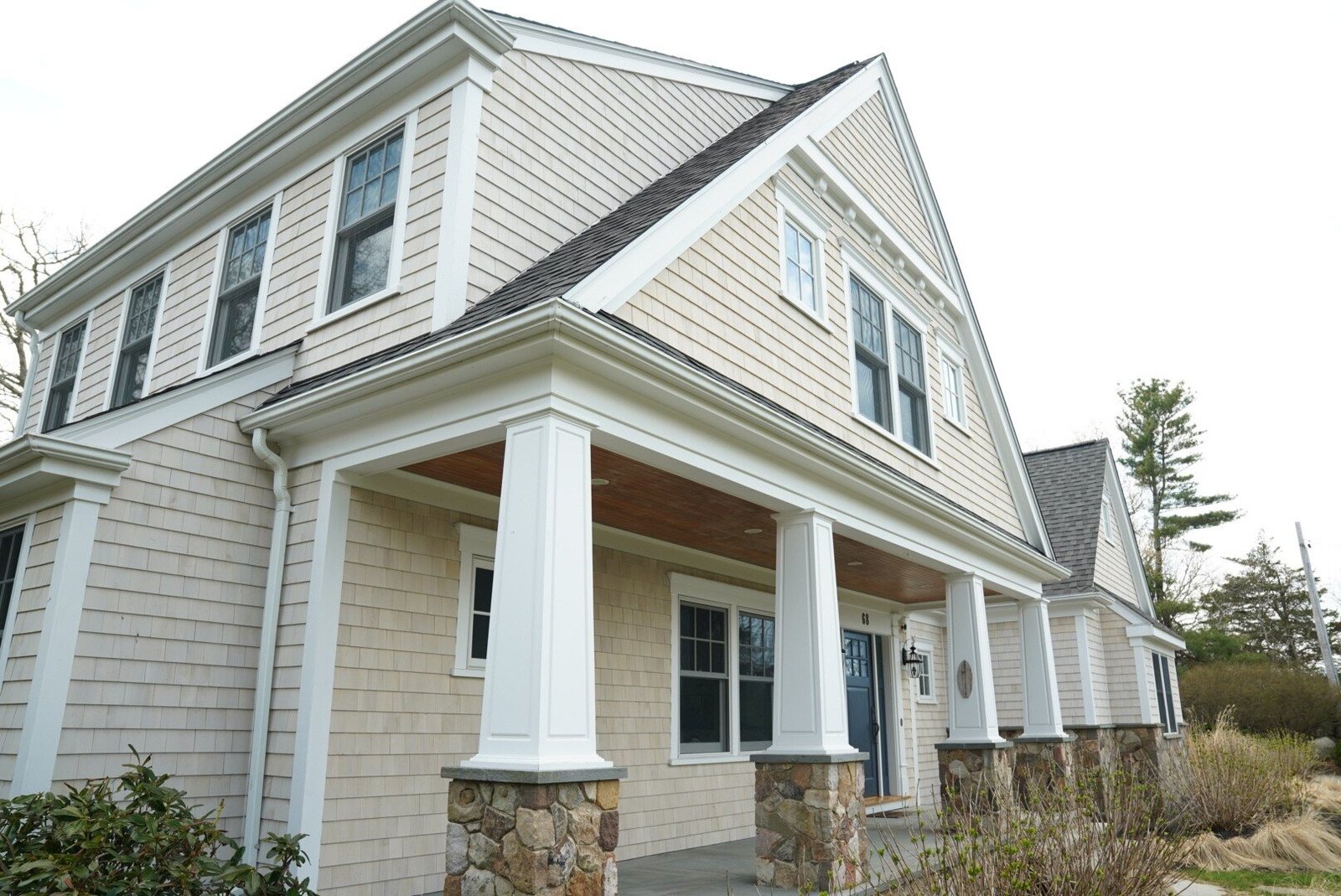
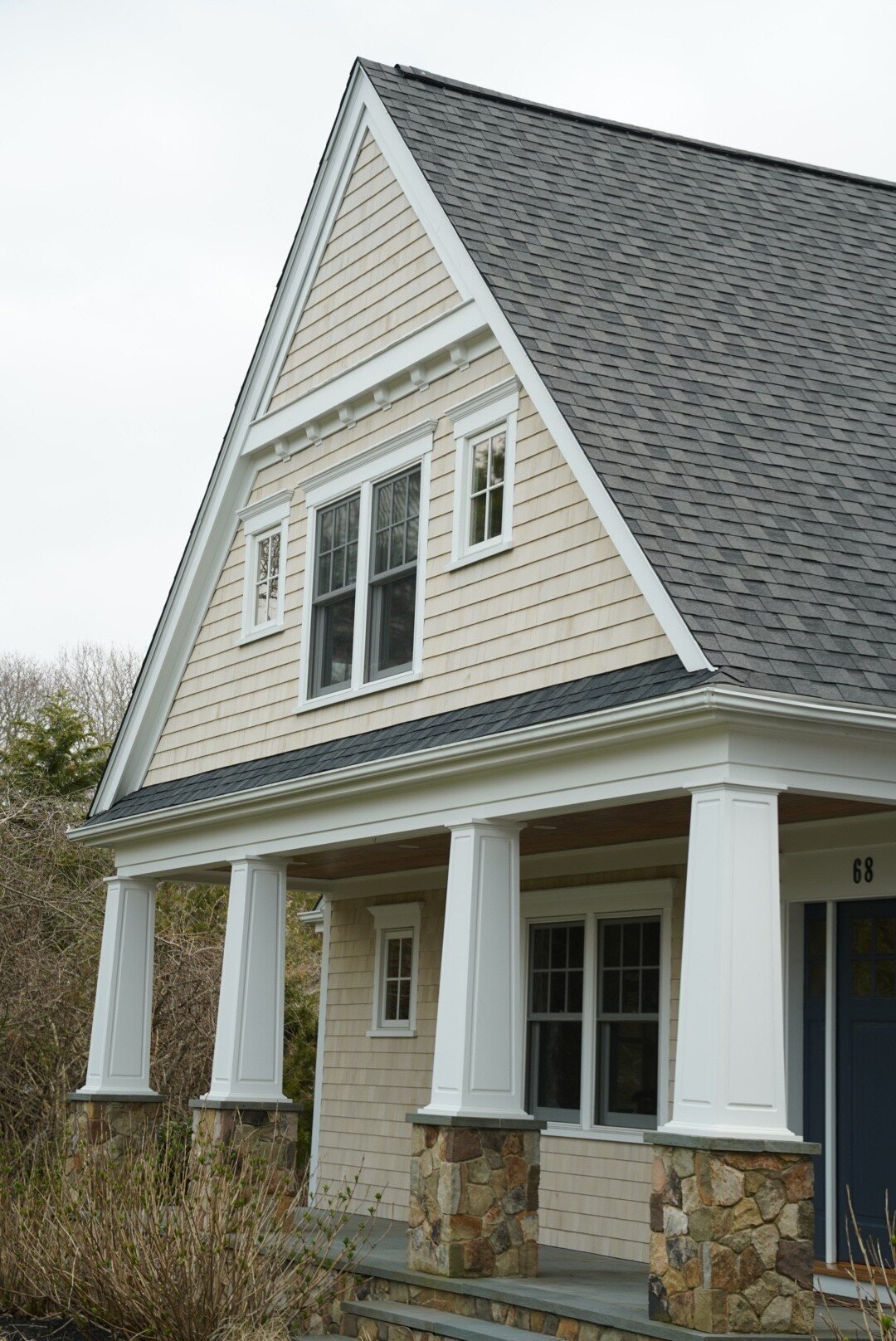
Wood shingles are the traditional siding on much of the north side of the Cape. Replacing worn shingles with the same kind of shingle is the simplest case. Switching to a different material, such as fiber cement or vinyl, is a change in appearance and should be expected to go before the committee. Whether a given alternative is acceptable can depend on the town, the house and how visible the wall is. Our cedar shingle siding guide covers the material options.
Roofing
Replacing asphalt shingles with similar asphalt shingles is usually more straightforward than changing material or color. Moving to metal, adding skylights, changing the roofline or adding a dormer are changes the committee will want to see. Ask before ordering material.
Windows and doors
Replacement windows are one of the most common applications. Committees pay attention to the style of the window, the divided-light pattern, the trim around it and whether the size of the opening changes. Changing the size or location of an opening is a bigger deal than swapping a window in the same opening. The same goes for entry doors, storm doors and garage doors.
Decks, porches and fences
A new deck or porch that is visible from the street needs review, as does replacing an existing one with a different design. Fences and walls along the road are often reviewed for height, style and material.
Paint and stain colors
How color is handled is one of the details homeowners most often get wrong. Ask your town's committee whether your color change needs an application before you buy paint or order pre-finished siding.
Exemptions and like-for-like work
Not every project needs a full Certificate of Appropriateness. Ordinary repair and replacement with the same material, the same design and the same color may qualify for an exemption, and some work that cannot be seen from a public way may also be exempt.
What counts as like-for-like is not always obvious. Replacing a window with one of a different brand but the same look might be treated differently from replacing a damaged sash. Get the committee's decision in writing before work starts. A short call to the office can save weeks of trouble.
Build approval time into the schedule
The biggest practical effect of the district on a project is time. A typical application includes a description of the work, photos of the house, drawings or a site plan for anything new, and product information or samples for the materials. The committee reviews it at a scheduled meeting, and some applications require a public hearing. There can also be a waiting period after a decision before it takes effect.
In most cases the town will not issue a building permit until the historic approval is in hand. Plan on several weeks at a minimum, and longer if the committee asks for changes or if meetings are booked up.
The way to keep that from delaying your project is to start early. If you want a new roof or siding in the spring, put the application in over the winter. Our article on when to schedule a roof replacement talks more about scheduling around the Cape's busy seasons.
What happens if you skip it
Starting work without the required approval can lead to a stop-work order, and a committee can require changes to work that was done without approval. Undoing a finished roof or siding job costs far more than filing the application would have. If a contractor tells you approval is not needed in the district, confirm that yourself with the town.
Other historic districts on Cape Cod
The Old King's Highway district is the one most people on the Cape have heard of, but it is not the only one. Other towns, including Falmouth, Chatham and Provincetown, have their own local historic districts or commissions with their own rules and review processes. Many towns also have demolition delay rules for older buildings that can apply even outside a district. If your house is older or sits in a village center anywhere in Barnstable County, check with the town before you plan exterior work.
How we handle projects in the district
Best Deal Home Group works across all 15 towns on Cape Cod, including the towns in the Old King's Highway district. On jobs that need historic approval, we build the review into the schedule and can pull together the photos, product information and material details the committee asks for. The committee makes the decision, so the earlier we start, the smoother it goes.
If you are planning siding and trim, windows and doors or a roof, call (774) 470-8511 or contact us for a free estimate.
Frequently asked questions
Which towns are in the Old King's Highway Historic District?
The Old King's Highway Regional Historic District includes parts of six Cape Cod towns: Sandwich, Barnstable, Yarmouth, Dennis, Brewster and Orleans. It runs along the north side of the Cape near Route 6A. Boundaries are set town by town, so being near 6A does not automatically mean a property is inside the district. Check your town's district map or call the local committee to confirm.
Do I need approval to replace my roof in the Old King's Highway district?
It depends on what you are changing. Replacing a roof with the same type and color of material may qualify for an exemption, while changing material, color, rooflines or adding skylights or dormers generally requires a Certificate of Appropriateness. Each town's committee makes that call, so contact them before ordering material. The building department will usually want the historic approval before issuing a permit.
Can I use fiber cement or vinyl siding in the historic district?
Switching from wood shingles to fiber cement, vinyl or another material changes how the house looks, so expect it to go before your town's Old King's Highway committee. Whether a particular product is approved can depend on the town, the house and how visible the walls are. Bring product samples and details to the application, and do not order material until you have a decision.
How long does Old King's Highway approval take?
Plan on several weeks at a minimum. The application has to be submitted before a scheduled committee meeting, some projects need a public hearing, and there can be a waiting period after the decision. If the committee asks for changes, add more time. For spring roofing or siding work, filing the application during the winter keeps the approval from holding up the job.
What happens if I start work without historic approval?
Starting exterior work in the Old King's Highway district without required approval can result in a stop-work order, and the committee can require changes to work that was done without approval. That can mean redoing siding, windows or a roof at your own expense. A call to the town's committee before work starts is the simplest way to avoid that risk.
Related services
Free Estimates
Ready to Get Started?
We come out, take a look, and give you a straight quote. No pressure, no obligation.
Keep reading