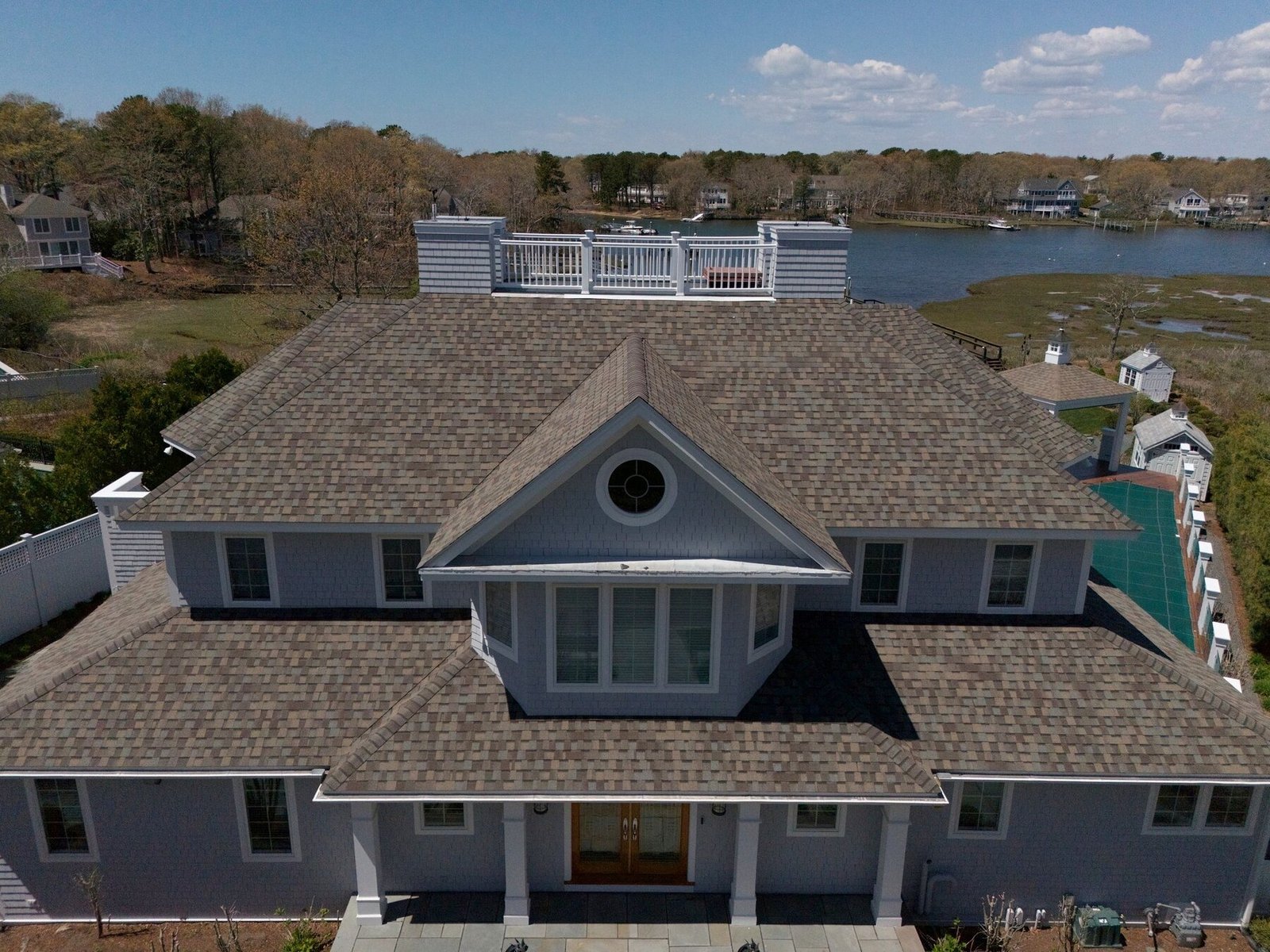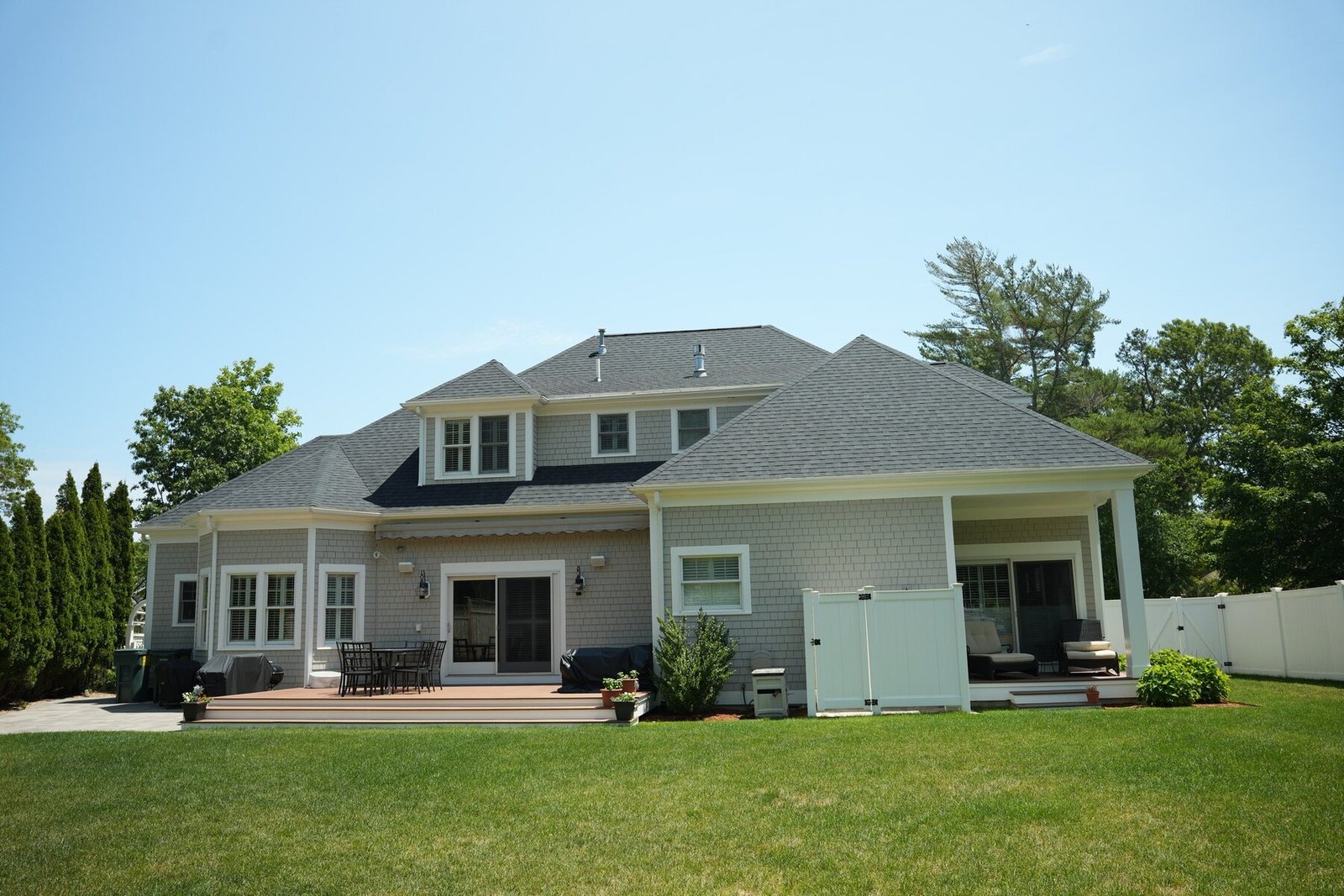
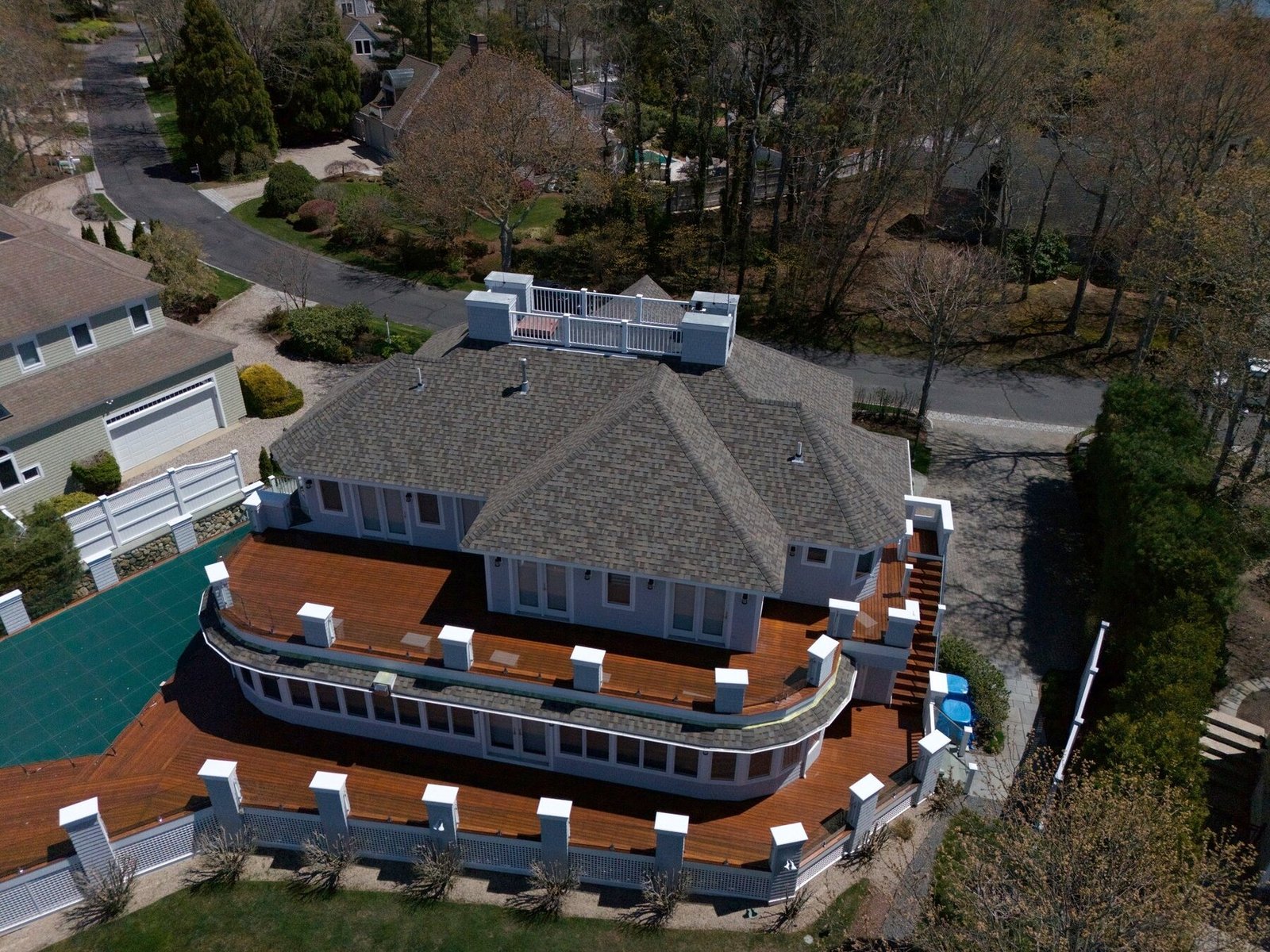
A large waterfront house, a roof with many planes, a rooftop deck and finished decks all around it. Here is how the job went from the old roof to the new one, with photos from each stage.
By the Best Deal Home Group team, Centerville, MA
This waterfront home on Cape Cod has a large hip roof with several planes, a rooftop deck and finished decks wrapping around two floors, all a few steps from a marsh and harbor. The old roof had weathered to a light, uneven tone and was due for replacement. The new one is a full tear-off and reroof with architectural shingles in a darker gray.
Before: the old roof
From the air, the old shingles had faded and worn unevenly across the planes, the typical look of a roof at the end of its life in salt air. On a house this size the first questions are practical: where the dumpster can go without damaging the driveway or landscaping, how to protect the decks and pool cover below, and how to stage material on a roof with this many sections.
During: tear-off and underlayment
The roof was stripped down to the deck section by section, so no part of the house was left open longer than necessary. With the old shingles off, the decking can be checked properly, and any damaged sheathing is replaced before anything new goes down.
Underlayment came next: ice and water shield along the eaves and in the valleys, synthetic underlayment over the rest of the deck, and new flashing where the roof meets walls and the rooftop deck. These are the parts of a roof no one sees once the job is done, and they decide how it handles wind-driven rain off the water.
Protecting the property is part of the work on a house like this. Decks, railings and the yard were covered during tear-off, and the site was cleaned at the end of each day.
After: the finished roof
The finished roof is a uniform dark gray architectural shingle across every plane, with clean lines at the hips and ridges, new metal at the edges and the rooftop deck, and the white trim and decks of the house standing out against it. You can see the whole project, before, during and after, in our projects gallery.
What makes a waterfront roof different
- Wind. Houses on open water see stronger gusts, so nailing patterns and starter courses at the edges matter.
- Salt. Fasteners and flashing near the shore need to resist corrosion.
- Access and protection. Decks, landscaping and neighbors close by mean careful staging and daily cleanup.
- Approvals. Depending on the town, a waterfront roof can involve a historic district certificate or a conservation filing for staging near resource areas. See our permits by town guide.
If your roof is showing its age, read roof repair or replacement and what drives roof replacement cost on Cape Cod, or request an estimate.
Frequently asked questions
Can a home stay occupied during a roof replacement?
Usually, yes. Working the roof section by section and drying in each area the same day keeps the house weathertight. There is noise during tear-off, so we plan the schedule with the owners.
What is different about roofing a house on the water?
Stronger wind, salt in the air and more exposed surroundings. That calls for careful nailing at the edges, corrosion-resistant fasteners and flashing, ice and water shield at eaves and valleys, and extra care protecting decks and landscaping below.
How long does a roof replacement on a large house take?
It depends on the size, the number of roof planes, the condition of the decking and the weather. A large, complex roof can take one to several weeks. We give you a schedule with the written estimate.
Related services
Free Estimates
Ready to Get Started?
We come out, take a look, and give you a straight quote. No pressure, no obligation.
Keep reading