How to Maximize Your Unfinished Basement
An unfinished basement is some of the most underused square footage in any home. With the right planning, it can become a family room, home office, guest suite, or all three. Here is how to get started.
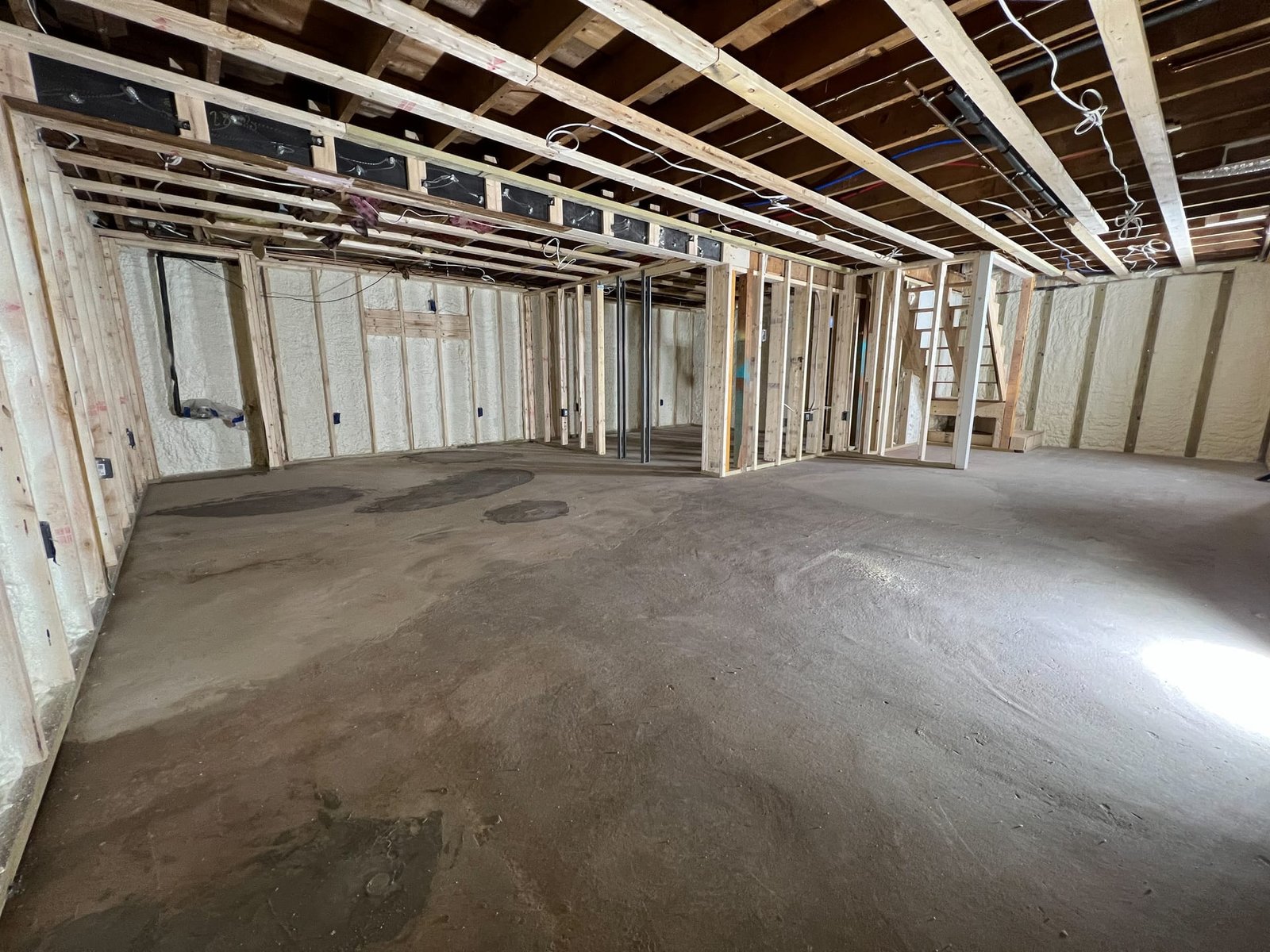
Most unfinished basements look the same: exposed concrete walls, bare joists overhead, maybe a laundry area and some storage shelves. It's easy to stop seeing that space as livable. But square footage is square footage, and on Cape Cod where homes tend to run smaller and real estate is expensive, a finished basement can add serious value to a home.
Here's how to think through a basement finishing project the right way.
Start With Moisture
Before you put a single stud in the ground, you need to understand whether your basement has a moisture problem. This is non-negotiable. Finishing over a damp basement traps moisture inside the walls and creates conditions for mold that will eventually destroy everything you just built.
Look for water stains on the concrete, efflorescence (white mineral deposits on the walls), musty odors, or condensation on the floor. If any of these are present, address the source first. That may mean improving drainage around the foundation, applying waterproof coating to the walls, installing a sump pump, or a combination of all three.
Plan the Layout Around What You Have
Your basement has fixed elements — mechanicals, support columns, the staircase, window locations. A good basement layout works with these rather than fighting them. Mechanical rooms (HVAC, water heater) should stay accessible. Columns can become features rather than obstacles with the right framing.
Before drawing anything, measure everything and photograph it. Know where your egress windows are, because those determine where sleeping areas can legally go. In Massachusetts, a room used as a bedroom requires a window that meets specific size requirements for emergency egress.
Think About What You Actually Need
The best basement is the one that solves a real problem in your house. If you have kids and no good hangout space, a family room makes sense. If you're working from home with no privacy, a home office changes your daily life. If you host out-of-town guests regularly, a guest suite with a bathroom pays for itself in hotel savings.
Pick one primary use and design around it. Multi-use basements work — a family room that doubles as a guest suite, for example — but trying to do too many things in one space usually means nothing works as well as it should.
Budget Realistically
A basic finished basement — framing, insulation, drywall, flooring, lighting, electrical — typically runs $25 to $50 per square foot in this area, depending on finishes and complexity. Adding a bathroom increases that significantly. So does a wet bar or a home theater setup.
The payback is strong. A finished basement adds livable square footage that typically returns 70 to 75 percent of its cost in resale value — and the quality of life improvement while you're living there is immediate.
If you're thinking about finishing your basement, we're happy to walk through the space with you and give you a realistic sense of what it would take.
Free Estimates
Ready to Get Started?
We come out, take a look, and give you a straight quote. No pressure, no obligation.
More on Interior