
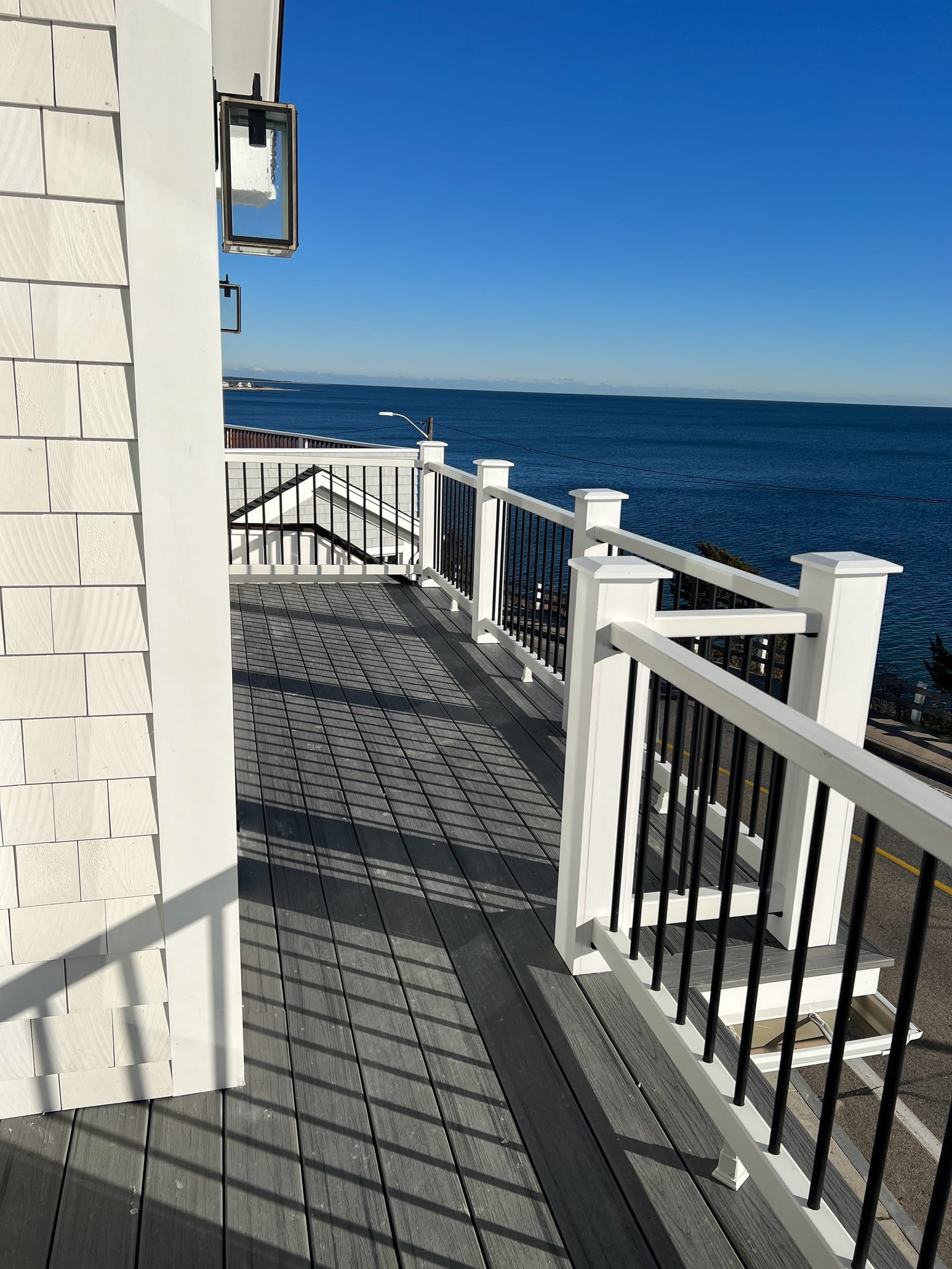
How to Choose the Right Deck Material for Cape Cod Weather
Salt air, high humidity, and harsh winters make Cape Cod tough on outdoor materials. We break down the pros and cons of pressure-treated wood, composite, and PVC decking so you can make the right call for your home.
Cape Cod is one of the most beautiful places to own a home — and one of the harshest environments for outdoor materials. Salt air accelerates corrosion and rot. Humidity causes wood to swell and warp. And freeze-thaw cycles crack and split anything that holds moisture. Choosing the wrong deck material means replacing it sooner than you planned.
Here is an honest breakdown of the three most common decking options and how they hold up on the Cape.
Pressure-Treated Wood
Pressure-treated lumber is the most affordable option upfront and widely available. The wood is treated with preservatives that resist rot and insects, which makes it suitable for ground contact and coastal environments. A well-built pressure-treated deck can last 15 to 20 years with proper maintenance.
The catch is that maintenance. You'll need to clean, sand, and stain or seal the deck every one to three years to keep it protected. Without that upkeep, the wood grays, cracks, and begins to splinter. On Cape Cod, the salt air speeds this process up. If you're willing to maintain it, it's a solid choice. If you're not, it will look neglected within a few years.
Composite Decking
Composite boards are made from a mix of wood fiber and recycled plastic. They look like wood, feel like wood, and require almost none of the maintenance. No staining, no sealing — just occasional cleaning with soap and water. Quality composite products from brands like TimberTech and Trex carry warranties of 25 to 30 years.
The tradeoff is cost. Composite decking typically runs two to three times the price of pressure-treated wood for materials alone. But when you factor in zero maintenance costs over 25 years, most homeowners find it cheaper in the long run. On Cape Cod specifically, composite is our most recommended option for primary decks.
PVC Decking
PVC boards are made entirely of plastic — no wood content at all. They are the most moisture-resistant option available and will not rot, warp, or splinter under any conditions. They're especially popular near pools and waterfront properties where standing water is a constant issue.
PVC is typically the most expensive option, and some homeowners find that it does not feel quite as natural underfoot as wood or composite. It also expands and contracts more dramatically with temperature swings, which requires careful installation. But for the right application, it is essentially maintenance-free for the life of the deck.
Our Recommendation
For most Cape Cod homeowners, composite decking hits the right balance of appearance, durability, and long-term value. If budget is the primary concern, pressure-treated wood is still a reasonable choice — just be prepared to maintain it. For waterfront or pool decks, PVC is worth the extra investment.
We work with all three materials and can help you figure out what makes sense for your specific project and budget. Reach out and we will give you a straight answer.
Free Estimates
Ready to Get Started?
We come out, take a look, and give you a straight quote. No pressure, no obligation.