A bathroom renovation can range from a few thousand dollars to well over $30,000. Knowing where to invest and where to cut corners without sacrificing quality makes all the difference in the final result.
By the Best Deal Home Group team, Centerville, MA · Updated
Bathroom remodels are one of the most popular renovation projects, and one of the easiest to overspend on. Showrooms are full of tempting finishes and fixtures, and it's easy to lose track of the budget when you're standing in front of a $900 faucet that looks incredible. But not every dollar in a bathroom renovation adds equal value.
Here's where to put your money and where to pull back.
Spend On: Tile Work
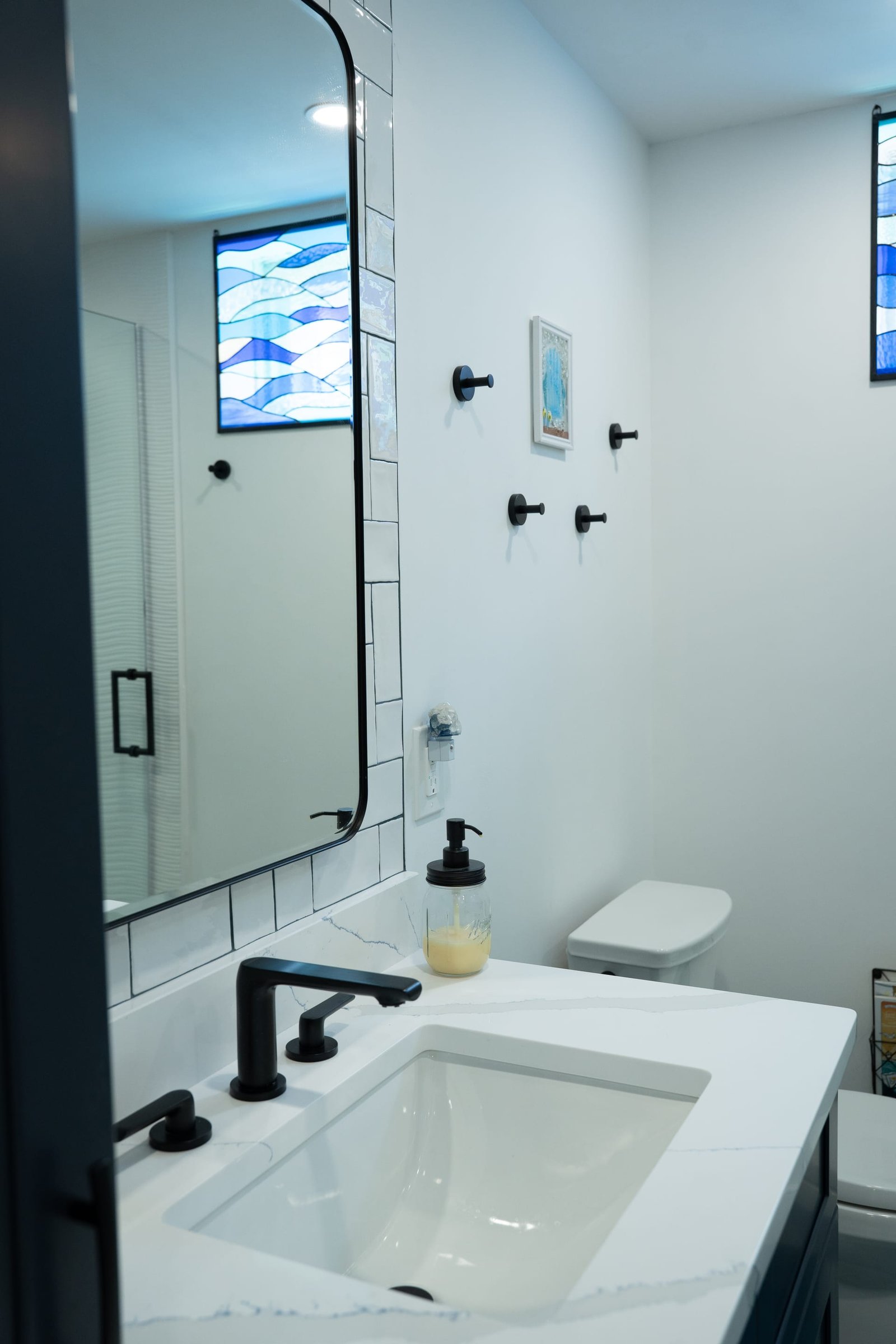
Tile is the most permanent visual element in a bathroom. It's also the first thing buyers notice and the hardest to change without a full demo. Quality tile laid by an experienced installer will look sharp for decades. Cheap tile or poor installation shows immediately: grout lines that aren't straight, tiles that don't lay flat, or grout that starts cracking within a year. This is not the place to cut corners.
Save On: Mirrors and Accessories
A simple, frameless mirror from a hardware store looks just as clean as a $600 designer piece in most bathrooms. Same goes for towel bars, toilet paper holders, and hooks. Buy something solid and consistent in finish, keep it simple, and put the difference toward tile or fixtures.
Spend On: The Shower
If your bathroom has a separate shower, invest in it. A well-built shower with quality tile, a frameless glass enclosure, and a good showerhead is the centerpiece of the room. A prefab shower surround saves money upfront but dates the bathroom immediately and doesn't hold up as well over time.
Save On: Toilets
There is a very wide range of toilet prices on the market. A mid-range toilet from a reputable brand (Toto, Kohler, American Standard) performs just as well as a $1,200 model for everyday use. Unless you have a specific reason to go high-end, a $300 to $500 toilet is perfectly fine.
Spend On: Ventilation
Bathrooms without proper ventilation develop mold and moisture problems quickly. A quality exhaust fan that actually moves air (look for at least 50 CFM for a small bathroom, more for larger spaces) is a small investment that protects everything else you spent money on.
Save On: Cabinet Hardware
Swapping out drawer pulls and cabinet knobs is one of the cheapest ways to update a vanity. You don't need to spend much here. Pick something that coordinates with your fixtures and faucets, and it will look intentional.
The bottom line: spend on the things that are hard to change and will be looked at every day. Save on the things that are easy to swap out later or that no one really notices. If you're planning a bathroom remodel and want help thinking through the budget, give us a call.
Frequently asked questions
Where should I spend the most money in a bathroom remodel?
Spend on the parts of a bathroom that are hard to change and used every day: tile work, the shower, and ventilation. Quality tile installed by an experienced tile setter lasts for decades, a well-built shower is the centerpiece of the room, and a good exhaust fan protects everything else from moisture. These are the areas where cutting corners shows quickly and costs the most to fix.
Where can I save money on a bathroom renovation?
Mirrors, towel bars, toilet paper holders, hooks, and cabinet hardware are easy places to save during a bathroom renovation. A simple frameless mirror looks clean in most bathrooms, and accessories only need to be solid and consistent in finish. A mid-range toilet from a reputable brand also performs well for everyday use. These items are inexpensive to replace later if you want an upgrade.
What size exhaust fan does a bathroom need?
A small bathroom needs an exhaust fan rated for at least 50 CFM (cubic feet per minute), and larger bathrooms need more capacity. The fan should actually move air out of the room, not just make noise. Proper bathroom ventilation prevents the mold and moisture problems that damage paint, grout, and cabinetry, which is especially important in humid coastal areas like Cape Cod.
Is a tiled shower better than a prefab shower surround?
A prefab shower surround costs less upfront, but it tends to date a bathroom quickly and does not hold up as well over time. A tiled shower with quality tile, a frameless glass enclosure, and a good showerhead becomes the focal point of the room and lasts much longer when installed correctly. For a bathroom you plan to keep for years, a tiled shower is usually the better investment.
Related services
Free Estimates
Ready to Get Started?
We come out, take a look, and give you a straight quote. No pressure, no obligation.
Keep reading